Roof Repair · the USA
Our crews focus on matching existing materials, documenting what is found, and leaving the site ready for normal use. This method reduces callbacks and gives owners clear information about their roof’s condition.
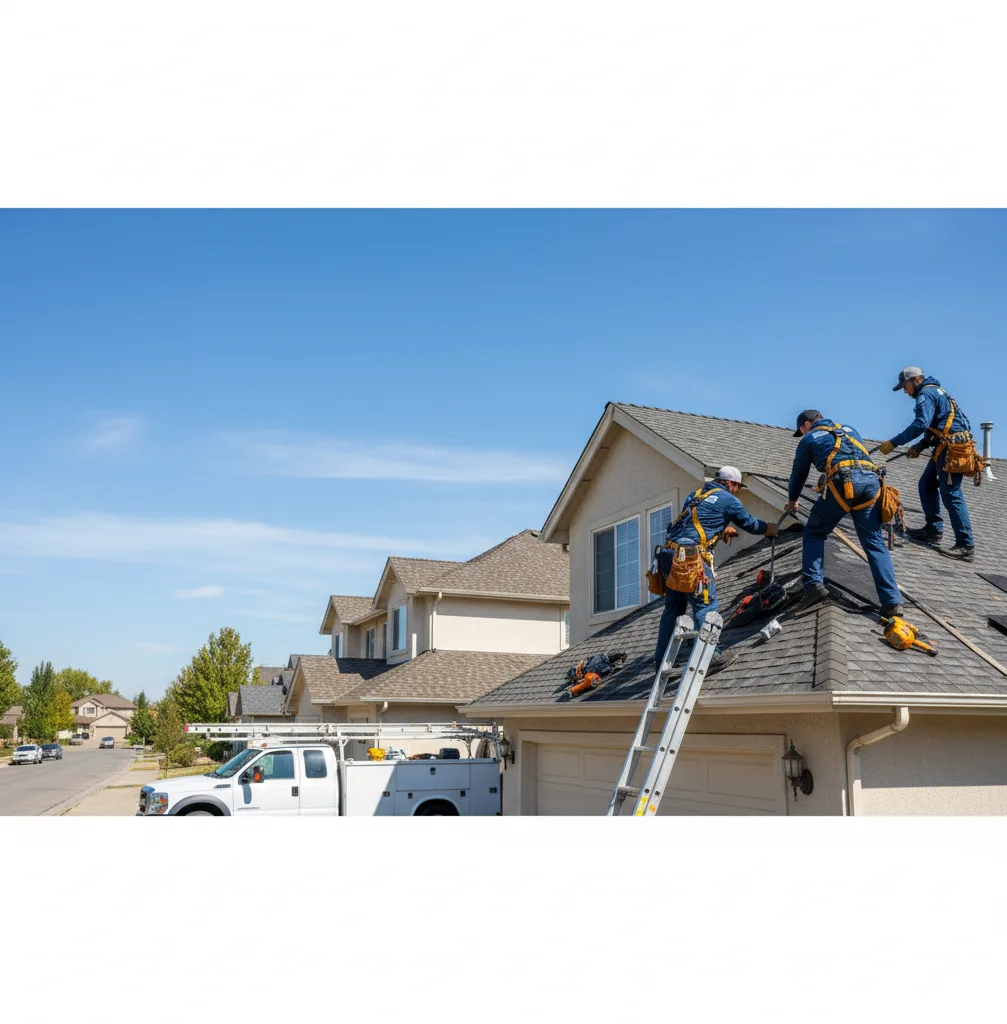
Roof leaks often start small at flashing around chimneys, vents, or skylights before spreading under shingles. A technician begins by walking the surface to look for lifted edges, cracked sealant, or missing granules. Inside the attic, insulation stains and wet sheathing show where water traveled. Once the entry points are marked, the crew removes only the damaged sections rather than stripping large areas. New underlayment is tucked beneath surrounding shingles, and fresh flashing is shaped to fit the contours of pipes or walls. This focused approach limits disruption while restoring the barrier that keeps rain out.
High winds can loosen ridge caps, while tree limbs scrape protective coatings during storms. Ice dams form along eaves in colder months and force water under shingles. Homeowners sometimes notice dark streaks on ceilings or musty smells in upper rooms before any drip appears. Checking gutters for debris buildup and looking at attic ventilation helps catch early warning signs. When granules collect in downspouts or shingles feel brittle underfoot, those are signals that sections may need attention soon.
FAQ

A technician first walks the roof to locate damaged or displaced material. Only the affected sections are removed and replaced with matching components. Flashing and seals around penetrations are checked at the same time. The homeowner receives notes on what was found and what was done before the crew leaves.
Interior stains can appear well away from the actual entry point, so an exterior inspection is needed to trace the path. If the stain grows after rain or the attic shows daylight through gaps, the condition should be checked soon. Waiting can allow moisture to reach insulation or decking and increase the scope of work later.
Small tab replacements are possible with basic tools, yet improper fastening or mismatched underlayment can create new leak points. Professional crews carry the correct fasteners and sealants for each roof type and document the work for insurance or future reference.